THL#10 – A bird mystery, A haiku moment, and Write Out
Thank goodness for the storm late yesterday afternoon! We’ve had an out-of-control bushfire burning through the countryside just outside my hometown, and hopefully the rain has helped firefighters bring it under control. The air has been thick with smoke for the past few days, so this rain was very welcome. Pity there isn’t more of it in the forecast… It’s frightening that bushfire season is starting in September these days!
Field Notes
Although I love heading up to Lake Inverell, or exploring wild and remote corners of the world, one of my favourite places is much closer to home: my parents’ front verandah.
I even wrote a haibun featuring it, which appeared in the final issue of The Haibun Journal (Issue 7:2).
With spring arriving in force here in Australia, the cast of birds I see from my usual spot in the sun has expanded. And recently, Mum and I noticed something odd.
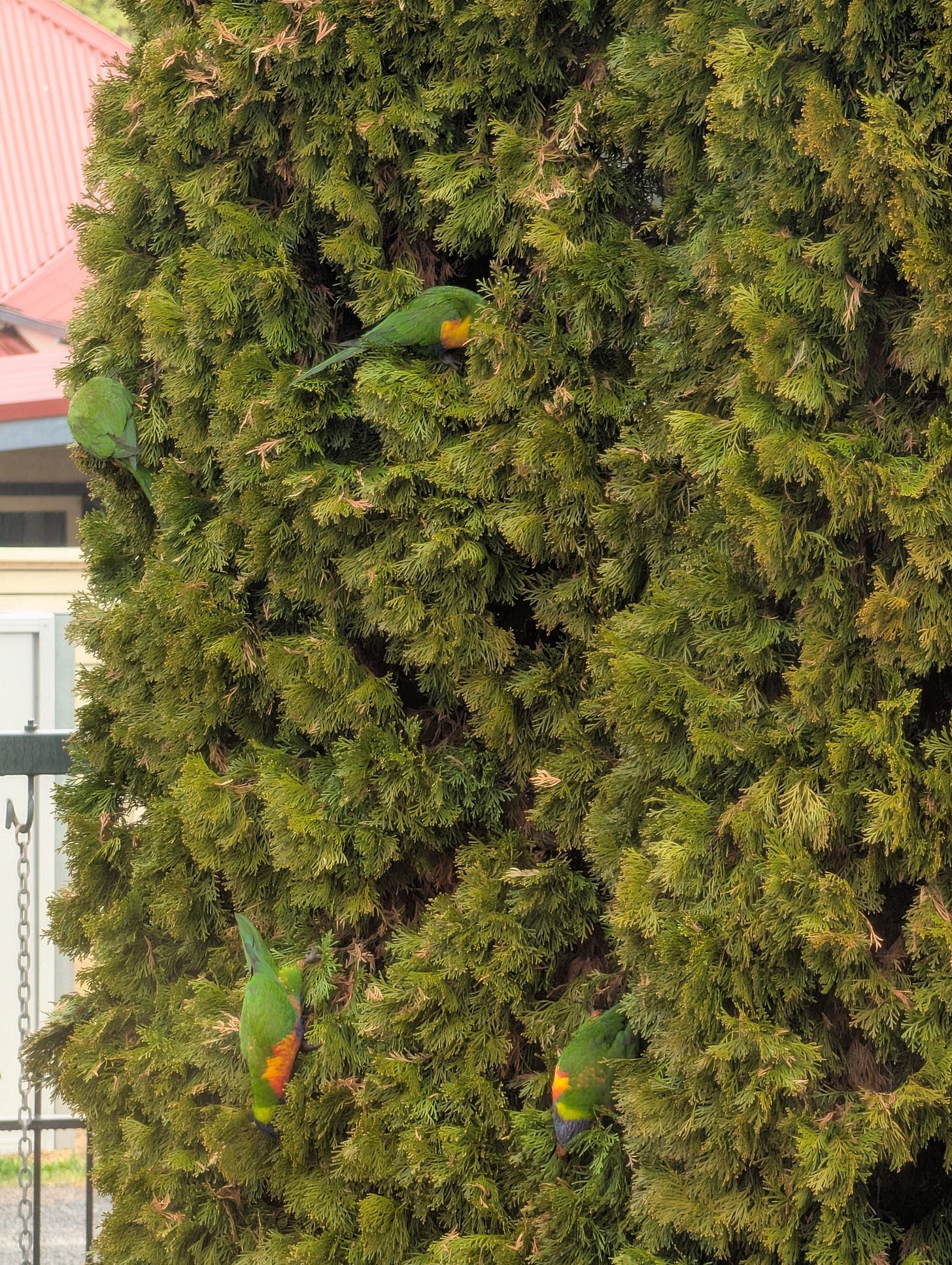
For about two weeks, Blue-faced Honeyeaters and Rainbow Lorikeets were all over both of the Thuja in my parents gardens. There were so many birds trying to get into them that squabbles regularly broke out.
But what were they doing in there? They’re not even Australian native trees.
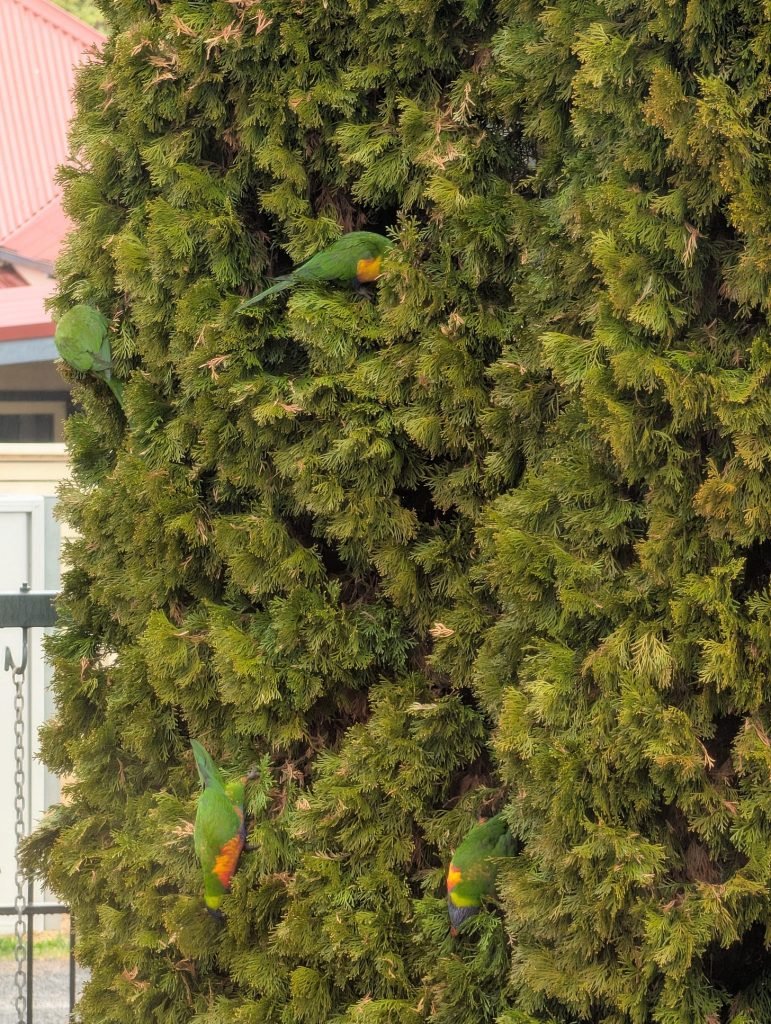
Through the binoculars, they appeared to be running their bills and tongues along the edges of the foliage, as though licking or sucking something from the surface. They kept coming back, day after day.
And then, just as suddenly, they stopped.
I don’t know exactly what they were after. They didn’t appear to be picking insects off the foliage, so I wondered if it could be sap.
A bit of research turned up another possibility: honeydew, the sugary liquid produced by some tiny sap-feeding insects. That could explain why two quite different birds were so interested in the same trees at the same time, and perhaps why the attraction disappeared so suddenly.
Not quite sure, and I (stupidly) didn’t go over for a closer look (too comfy where I was 😉 ).
But I rather like having a small mystery in the garden.
A Haiku Moment
Last newsletter, I looked at one of Buson’s haiku and how much can sit beneath what initially seems like a simple description.
This week, I want to look even closer, at how much work a single word (or two) can do.
In my haiku workshops, one of the things I emphasise is to “fight for the right word”. With so few words to play with, each one really needs to earn its place, and the right word can do much more than simply describe what’s there.
Nowhere is this more evident than in the season word (kigo).
Rather than simply telling us what time of year it is, one of the superpowers of a well-chosen season word is that it can also help set the emotional tone of the poem.
Think about the difference between spring rain and autumn rain.
Both tell us it’s raining. But what do you associate with each one?
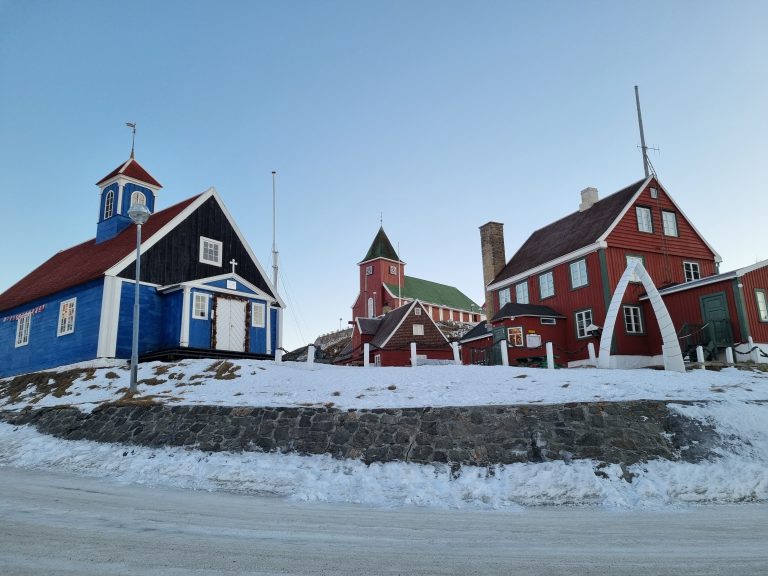
For me, spring rain suggests lightness and freshness, while autumn rain brings dreary skies, cold and damp. Of course, those associations depend on where you come from. In Greenland, spring rain isn’t really a thing. It’s still snow! But the challenges of global haiku are a topic for another time.
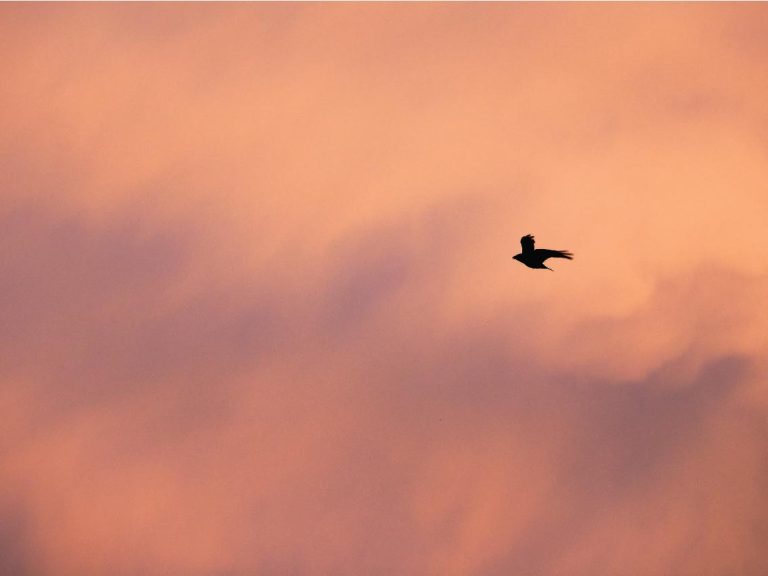
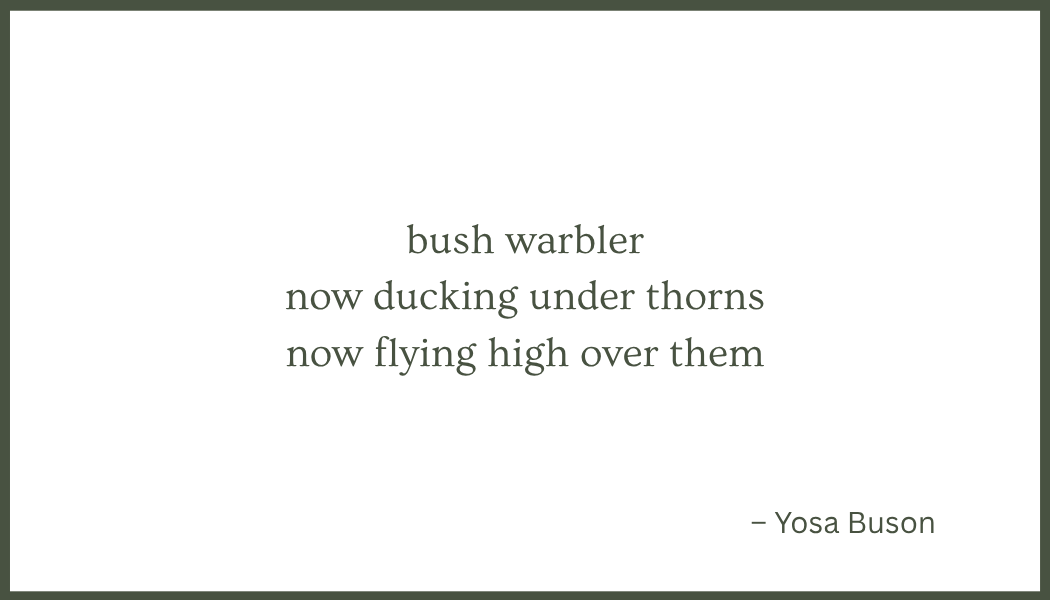
This is what I’ve been thinking about while reading Buson’s haiku about bush warblers. Once I understood more about the associations the bush warbler carries in Japanese haiku, I began to read those poems differently.
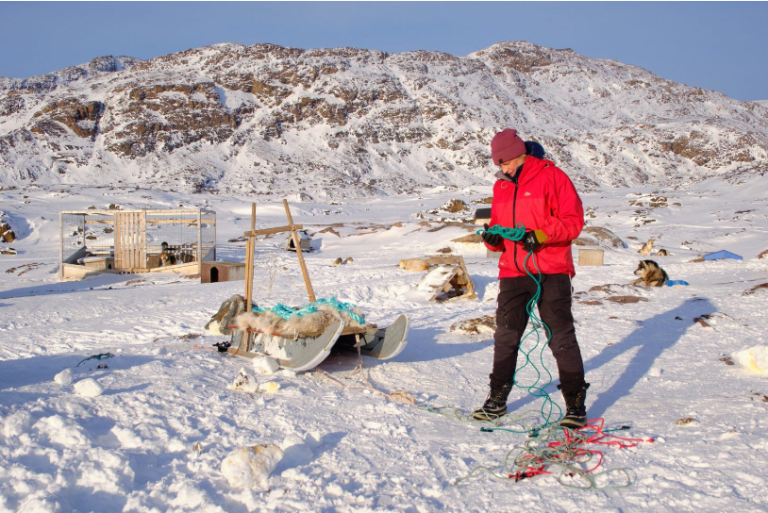
I eventually used three of them to create my haibun Wayfinding, about leaving Greenland and wondering what I do next in life. This haiku closes the haibun.
In the latest blog post on my website, I take this a step further: what happens to a haibun when you choose one haiku rather than another, and the role the season word and its emotional associations can play in that choice.
Read: How the season word affects haiku and haibun
And if this has made you curious about haiku, I’ve put together a 10-page Haiku Quickstart Guide based on the workshop I delivered to help you get started. Subscribe to this newsletter to download your copy.
Attention Practices
I’m very excited that this year’s Write Out is only a couple of weeks away!
Write Out is an annual two-week event from the National Writing Project in the US that (as the name suggests) encourages people to get outside and write. It’s free, open to everyone anywhere in the world, and this year’s theme is Write Where We Stand.
What I particularly like about Write Out is that so many of the activities start with noticing. Before you write, you’re encouraged to stop, look around and pay attention to where you actually are: the colours, sounds, plants, animals, weather, people and other details that make up a place.
And you don’t need to be somewhere spectacular to do that. It could be a national park, but it could just as easily be your backyard, a local park, your street or somewhere you pass every day.
One of my favourite things about Write Out is the Choice Boards, collections of place-based writing ideas for all ages. There are prompts involving poetry, photography, observation and mapping, all offering different ways to notice a place and respond to what you find.
Have a look under “Past” (in the top navigation) as well, where you’ll find Choice Boards from previous years.
I was particularly excited to see Haiku Comics on this year’s Choice Board. I’ve been a fan of Grant Snider’s Incidental Comics substack for a while now, so that one immediately caught my attention.
There’s also a Classroom Guide and Community Toolkit if you’d like to get a class, group or community involved.
Write Out runs from 11–25 October, but there’s no need to wait until then to start exploring the resources.
Something to Try
One of the prompts in this year’s Write Out is Try Colours Around You.
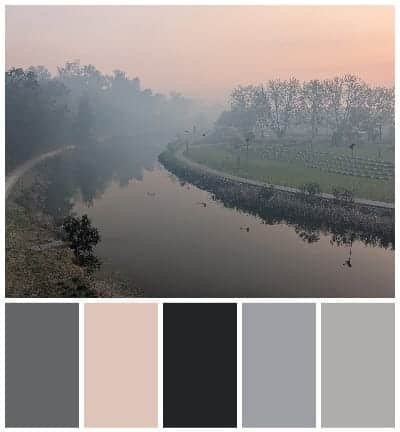
It’s a different take on the Colour Walk I talked about in an earlier This Haiku Life. Instead of choosing one colour and looking for it as you walk, this time choose a place to sit or stand and see how many colours you can find without going anywhere.
Look up, down, left and right, behind you and in front of you. Look for the obvious colours, but also the tiny patches and different shades you might normally overlook.
Write down every shade you notice. If you have watercolours or coloured pencils with you, you could make a small colour palette of your place.
Then, if you want to take it further, use some of those colours in a prose or a poem.