THL#11 – Bottlebrush in bloom, A haiku moment, and Forest Bathing
I’ve had my first bout of hayfever in about 12 years this week. After seven years in the Arctic, I don’t think my sinuses know what to do with all the pollen and grass seeds that have suddenly appeared!
Field Notes
The last fortnight has been all about grass seeds and bottlebrush flowers.
From my favourite spot, with my toes in the sun on my parents’ front verandah, I’ve been watching hundreds of House Sparrows feasting on the buffalo grass seed. Mum even banned Dad from mowing for a week so we could keep watching! Plenty of parrots have been joining in, too.
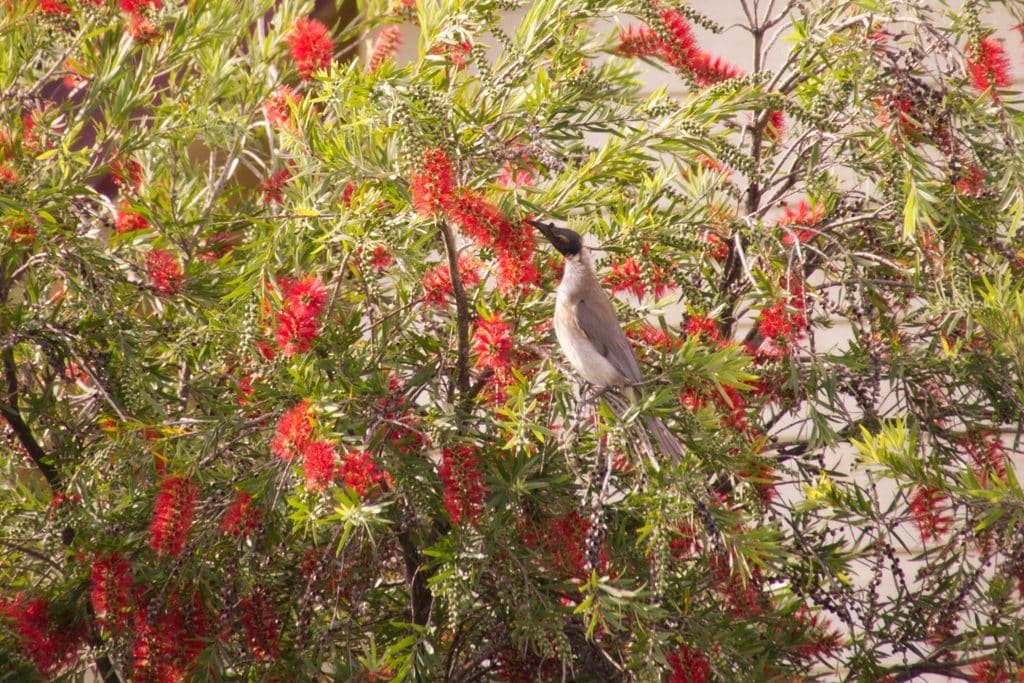
Meanwhile, across the street, there have been almost daily squabbles over the bottlebrush flowers. Wattlebirds, honeyeaters, parrots, magpies, and friarbirds have all been arguing over who gets the best of the red blossoms, chasing each other from branch to branch.
I’ve particularly loved listening to the Noisy Friarbirds. They’ll go on clucking away for a good 5–10 seconds, pause, then start up again. It’s the intonation and inflections that get me. It sounds just like they’re having a good old natter, with someone telling a long story and stopping occasionally for a response!
You can hear what I mean in the first part of the video below.
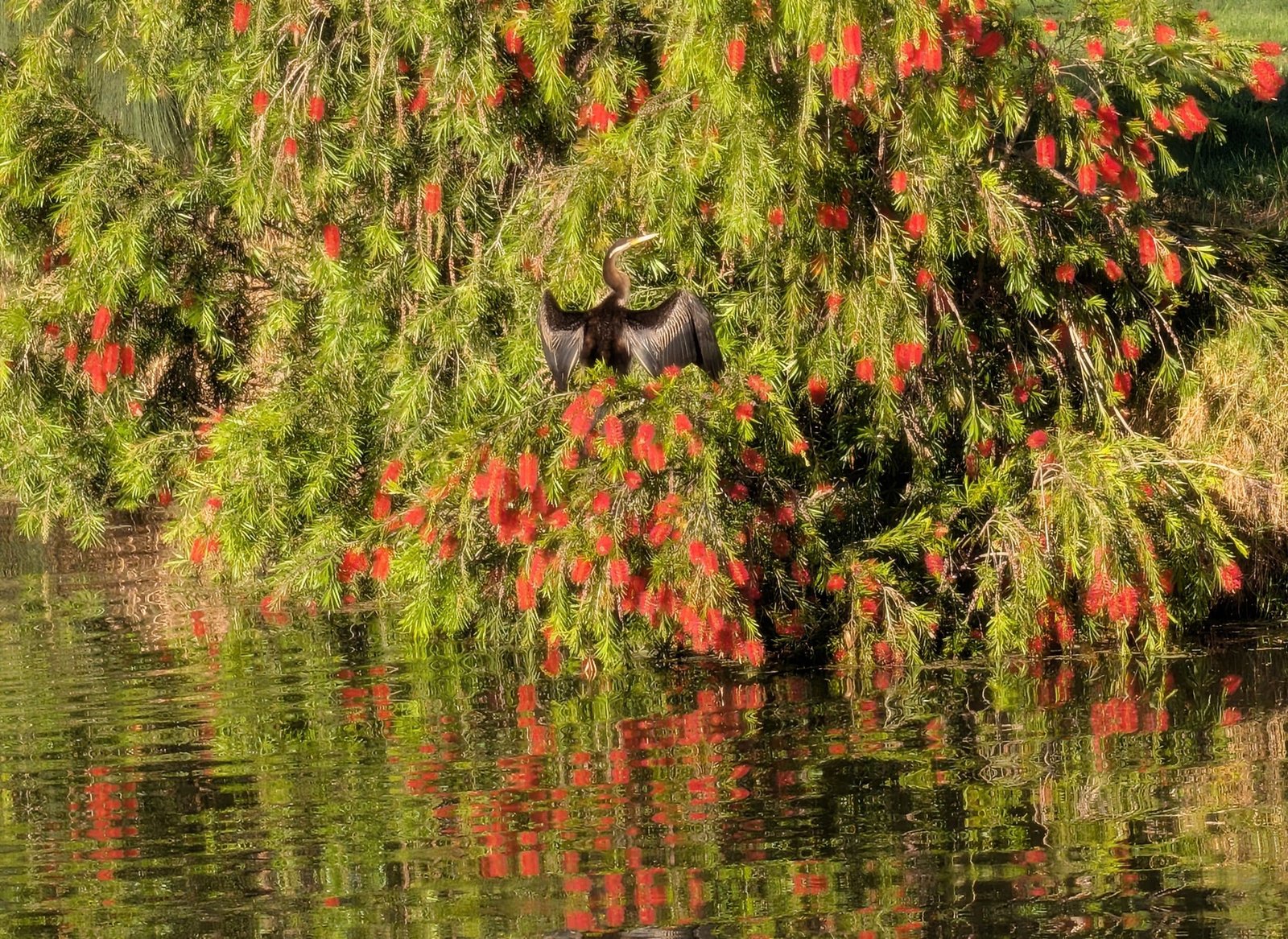
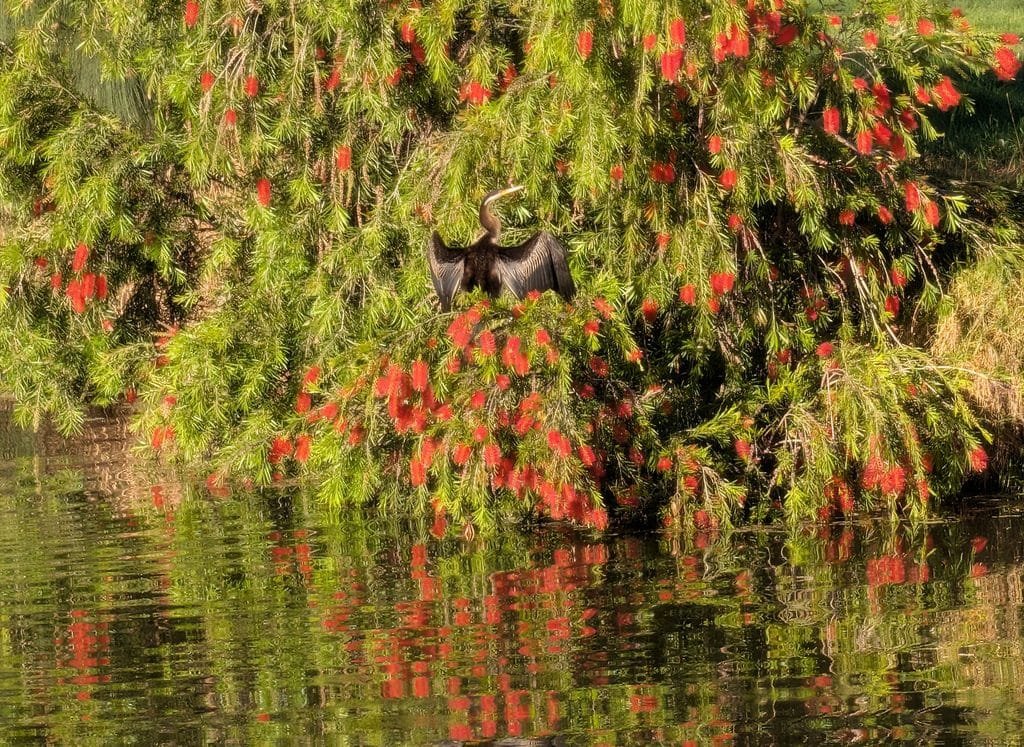
And it’s not just the birds I’ve been enjoying. The bottlebrushes themselves are looking wonderful at the moment, especially when the early morning light catches the red flowers.
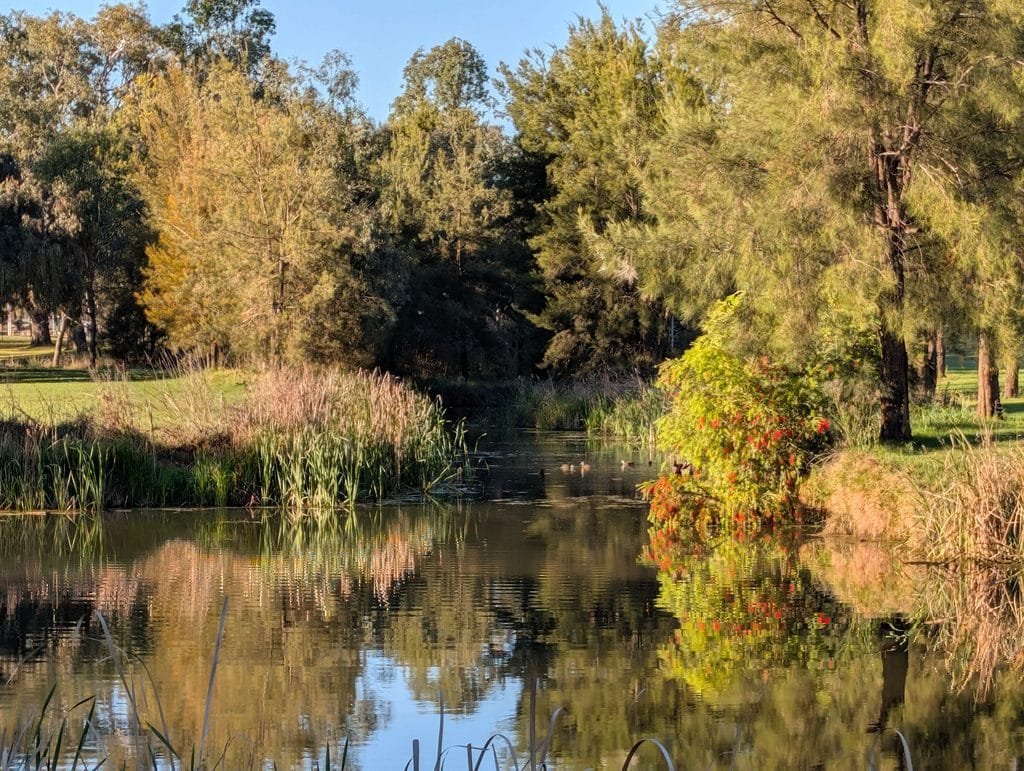
I took these two photographs along the Inverell Riverside Walk. The second is an Australasian Darter drying its wings among the blossoms (can you spot him in the first image?). Apparently, even when I’m admiring the flowers, I can’t help finding another bird!
A Haiku Moment
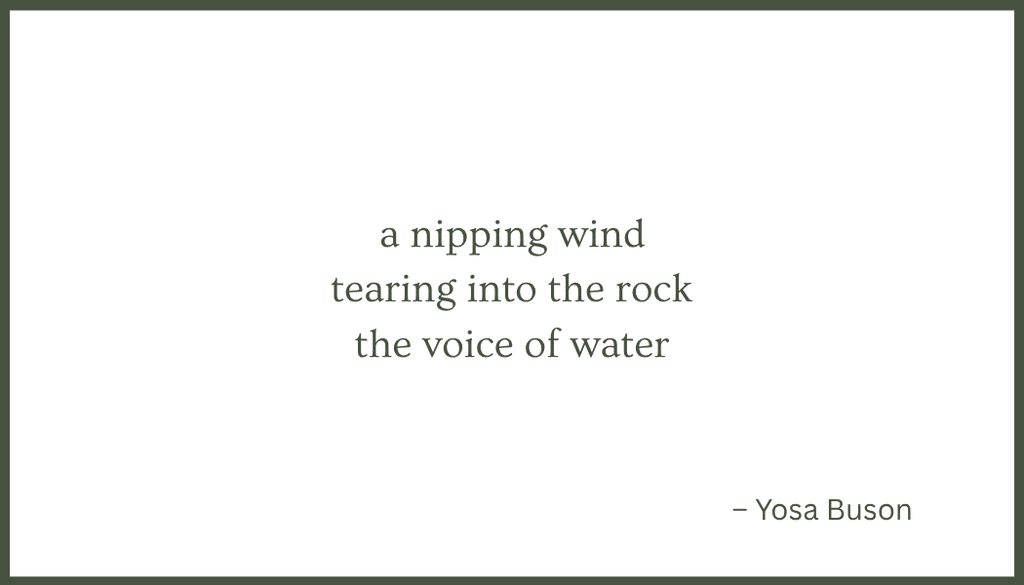
This haiku reminds me of being in Iceland.
I picture myself standing on the upper plateau above Skógafoss, before the hordes of tourists arrive. I’m wrapped up in a warm down jacket, with waterproofs over the top to keep out the spray and the cold wind that always seems to blow in Iceland.
I’m looking down over the immense waterfall (Iceland really does do great waterfalls), listening to the water roaring over the edge and onto the coastal plain below. Water that has been wearing away the rock for thousands of years.
Look at how the lines work together.
The first two make sense together. So do the last two. But that final line makes me go back and read the whole thing again. What’s tearing into what?
Is the wind tearing into the rock? Or is it the water, gradually tearing away the rock as it flows?
I find myself reading it again, trying out the different possibilities.
Another thing I noticed is that there’s no explicit visual description. Instead, we feel the nipping wind, imagine the force of something tearing into rock, and hear the voice of water.
I particularly like that last phrase. Water doesn’t literally have a voice, but we all know how different it can sound. A gentle trickle, a stream running over stones, or the roar of a waterfall. Buson leaves us to imagine it.
There’s also the contrast between the elements. Wind and water are constantly moving, while the rock seems solid and permanent. Yet both wind and water can gradually wear away rock over thousands, even millions, of years (yes, I’m a geology nerd 🙂 ).
And what about the mood?
‘Nipping’ and ‘tearing’ are quite harsh words. This isn’t necessarily a peaceful scene. But I don’t find it unpleasant. Perhaps because I love wild, exposed landscapes, I find it exhilarating.
How do you read it?
And if this has made you curious about haiku, I’ve put together a 10-page Haiku Quickstart Guide based on the workshop I delivered to help you get started. Subscribe to this newsletter to download your copy.
Attention Practices
I spend a lot of time outdoors. And although I often head out intending to simply be in nature, without needing to achieve anything, I rarely stick with it.
Fortunately, I’m not addicted to tracking every step or kilometre with an exercise watch (although I admit I record the GPX tracks of my longer hikes, mostly for my travel blog). But I do end up taking photographs, writing haiku, recording sounds, looking for birds, etc. There’s nearly always something I end up trying to do, find, or create.
Perhaps it’s because so much of my early outdoor experience revolved around hiking. There was always a destination to reach, a campsite to get to before dark, and photographs to take along the way.
I’ve recently been reading quite a few books about being present in the landscape, including Indigenous ways of knowing and relating to Country. About listening to what a place has to tell you, and experiencing what’s actually there rather than what you expect to find.
I love this idea! But somehow, I still get distracted :-/
Which brings me to shinrin-yoku, the Japanese practice of forest bathing.
Introduced by Japan’s Forestry Agency in 1982, forest bathing has nothing to do with water. It’s about spending time in a forest and experiencing it through your senses.
I particularly liked this line from the video below:
It stops being a backdrop for whatever you’re trying to accomplish. It becomes the whole experience on its own terms.
You might wander slowly, stopping when something catches your attention. Or simply sit and notice the light, sounds, smells, and movement around you.
And you don’t necessarily need a forest. A park, garden, or patch of trees near home will do (I’m a desert girl, myself).
So I think my next challenge should be to spend fifteen minutes sitting under a tree without reaching for my camera or mentally composing a haiku.
I wonder how long I’ll last! Who wants to join me?
Something to Try
Find somewhere outside where you can sit comfortably for fifteen minutes. It could be a park, your garden, a balcony, or even your front doorstep.
Leave your phone, camera, and notebook behind.
For those fifteen minutes, don’t try to identify birds, find something interesting, or come away with anything to show for your time. You don’t even have to make an effort to notice anything.
Just sit.
If something catches your attention, that’s fine. Follow it for a while. But don’t feel you need to do anything with it.
And if you find yourself thinking about what you could photograph, record, or write about (as I inevitably do!), let the thought go.
See what it’s like to spend fifteen minutes outside without needing to bring anything back from the experience.