THL #04 – Birds, haiku, and an awareness prompt
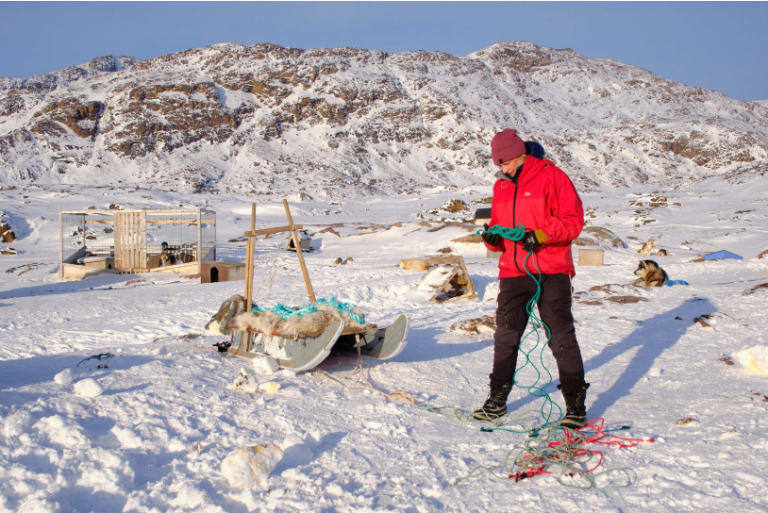
This week I started getting rid of non-essential stuff from my apartment. Trying to get the jump on selling everything before leaving Greenland at the end of March 😢
I am really, really going to miss this view!

Field Notes
Turns out, when you live in a very small town and the streets are all higgledy-piggledy, RBNXPLRNG doesn’t work so well. I kept running out of road!
But last weekend, on my way home from a friend’s Kaffemik (a Greenlandic party – this time for her 5-year-old daughter), I was super-excited to spot a bird I’d never seen before. Actually, there were a couple of hundred of them (the image below doesn’t tell the full story) flocking on the inlet near Sisimiut’s bridge.

I didn’t have my binoculars with me (doh!), but I did have a telephoto lens on my camera, which was just long enough to identify them as Common Eiders and get some OK shots. I’ve crossed paths with King Eiders before, but this was my first time for this species.

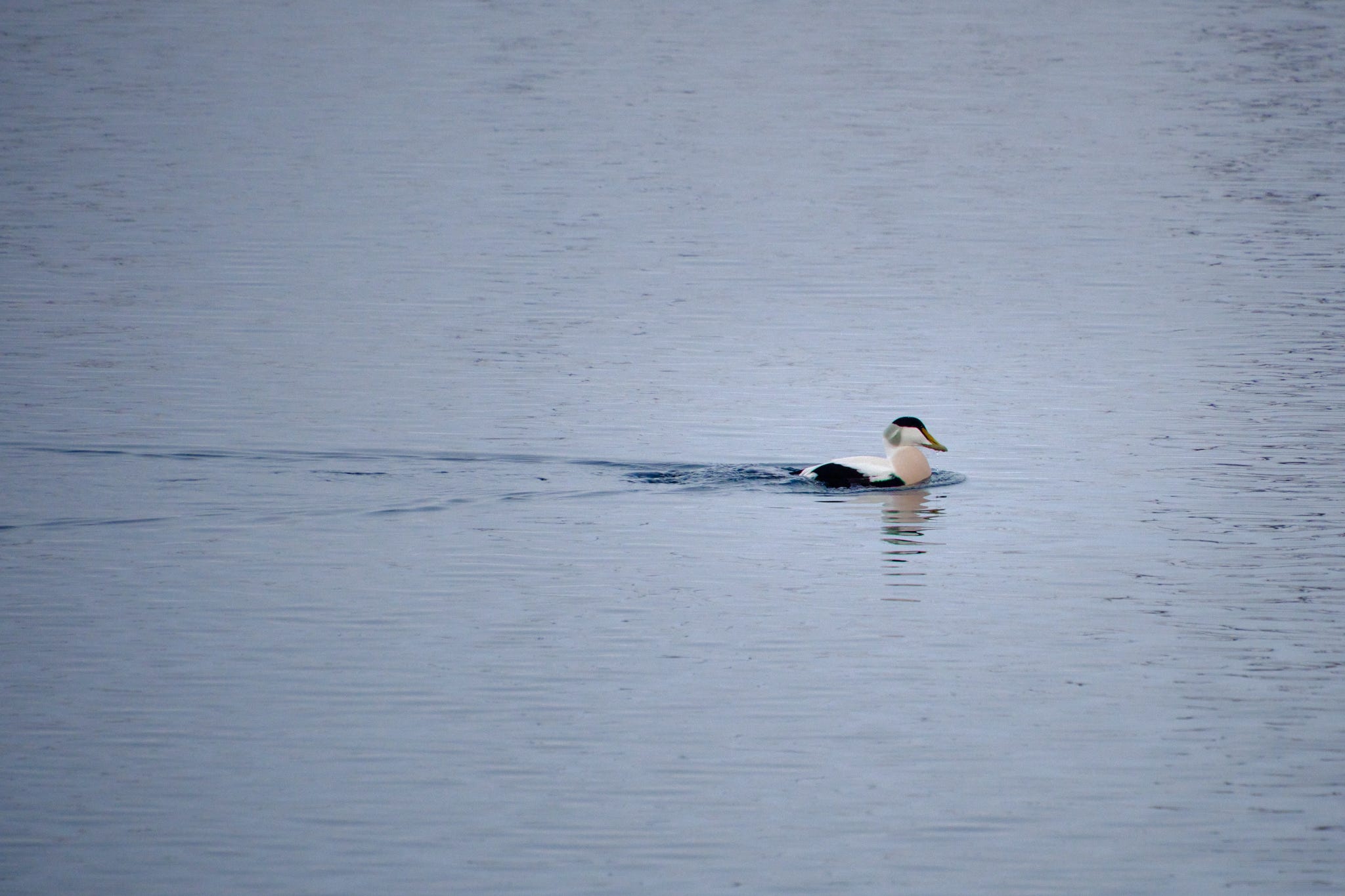
To give myself a challenge, I even tried to capture shots of the males as they dove.

Yeah… I’m not really a wildlife photographer.
In all, I ended up watching them for about half an hour, but at -15°C, it was getting a bit chilly!
I was such a joy to see a flock this large and to add a new species to my ‘life list‘. The Merlin app was a huge help in confirming the ID (check out the details below).
A Haiku Moment
Here’s a haiku and the image that inspired it submitted by a participant at one of my recent workshops:
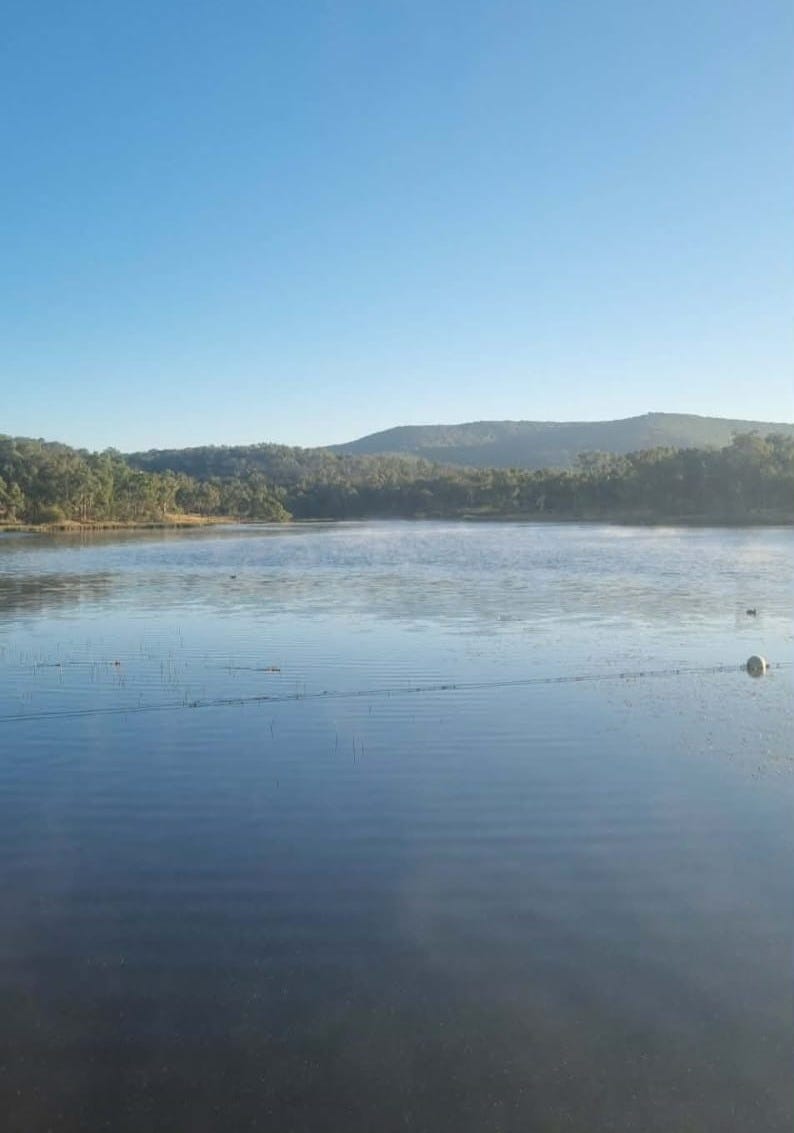
Steam catches the first light
Heat lifting off gentle ripples
Memory of yesterday
I was so pleased she sent me this first attempt and that my workshop inspired her to try writing haiku. After all, one of the great things about haiku is that it offers a simple, powerful way to notice the world more closely.
Here’s the feedback I sent her:
What works well:
- The focus on one moment.
- You avoided run-on lines; there are three distinct lines.
- “Heat” effectively conveys the season, suggesting summer.
Opportunities:
- Generally don’t capitalise the first word in each line (unless it is a proper noun)
- Haiku usually have two images: a context and an observation. Here, it reads like three completely separate phrases rather than connected utterances. Watch out for strong, long pauses at the end of each line.
- The third line is very “thinking mind”. Instead of showing a concrete image, it presents an interpretation, guiding the reader on what to think or feel. “Memory of yesterday” is conceptual rather than tangible.
Suggested approach:
Based on my interpretation of your haiku (though I’m not certain how “memory of yesterday” fits), a rewrite that focuses on concrete images and a single moment of perception could be:
in the crisp dawn
drifting across the shallow lake
curls of steam fog
Why this works:
- 2 images:
- 1st line = context (when)
- 2nd & 3rd lines = action/observation
- 3 utterances – each line naturally has a slight pause at the end, but they do follow one another
- It’s generally good practice to name specifics where relevant. If the reader knows how steam fog arises, they will be able to glean that this is a summer haiku
- I went through several iterations to land on “curls” of steam fog and “crisp” dawn, fighting for the best words to capture the moment.
If you’d like to get started with haiku and learn more about the above breakdown, subscribe to this newsletter to download a 10-page quickstart guide.
Attention Practices
February is the month of the annual Great Backyard Bird Count – a global citizen-science event where people spend a few minutes (or a few hours) watching birds in their backyard (as the name suggests) and reporting what they see. While the 2026 count finished a few days ago, that just means you have a whole year to prepare and get to know your local birds.
Birdwatching is a fantastic exercise in attention. You don’t need to be a full-on twitcher – just a curious observer. Noticing the differences between seagull species, the subtle movements of a sparrow, or the different calls of the ravens trains your eyes, ears, and mind to pay closer attention in general.
Tools like the Merlin App and eBird make identifying species easy, whether by sight or by sound, and I encourage you to give them a go to learn more about the birds you encounter.
Then, next year when the count returns, you’ll be ready to contribute data to this global initiative.
In the meantime, try listening for bird calls in your backyard or local park. It’s a simple, year-round way to sharpen your observational skills (especially your listening skills) and connect with the life around you.
Something to Try
In Japanese, the word Komorebi describes sunlight filtering through the leaves of trees. It isn’t just “light”; it’s a specific, fleeting collaboration between the sun, the wind, and the branches.
Watch the video to learn more.
This week, your mission is to notice your Komorebi moment.
- Find a spot where light filters through leaves, blinds, or any partially obscured window.
- Take a few minutes to observe the shapes, patterns, and movement of that light.
- how does it change as you watch?
- what feelings does it evoke in you?
- Take a photo, draw a sketch, or write a single sentence (or haiku) about that specific moment. Remember: the sun will shift, and this exact pattern will never exist in quite the same way again.
Thanks for reading and have a great week!
Best wishes – Lisa
lisagermany.art
👉 BTW If you enjoy this newsletter, please help spread the word