THL #03 – Tiny find results, haiku, RBNXPLRNG, and an awareness prompt
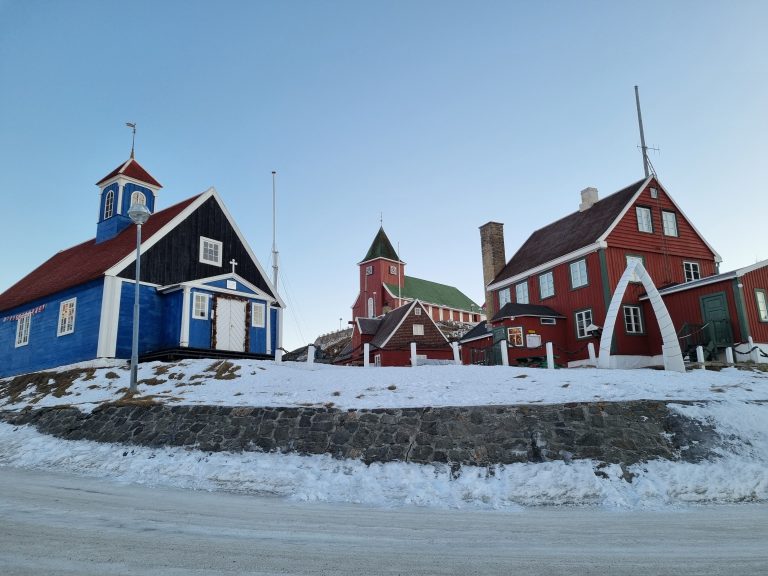
I won’t keep moaning about our continued lack of snow. We did get a little bit – enough to make it look like winter again – but the forecast isn’t promising…
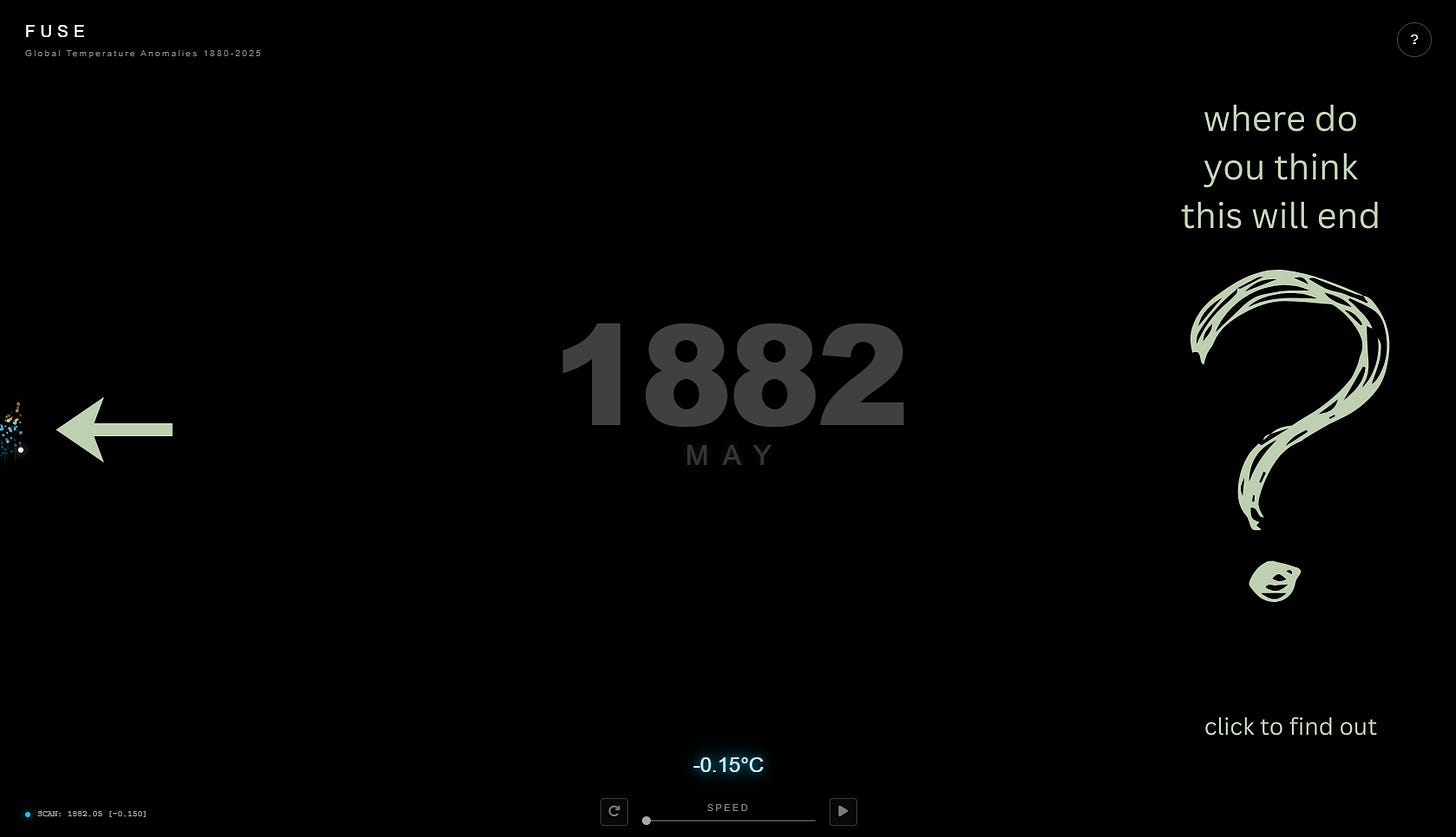
Related to this, I came across an amazing visualisation of the last 140-plus years of climate anomalies, built from raw NASA GISTEMP data and rendered as a particle system. Have I mentioned that I have a PhD in astrophysics and completely nerd out over data?
I highly encourage you click the image and take a look. Trust me – you don’t have to be a scientist to understand what it’s showing… 😟
Field Notes
Last week’s prompt was to look for something small and overlooked. What did you find?
I was back down in the Sisimiut Port area scoping out the action (the joy and challenge of a long-term creative project), and admit I struggled a little with this assignment. I had bypassed the fishing harbour where I’m sure I could have found blood spatters or something similar that would have fit the brief, and was walking the same route as last week. To add to the challenge, it had snowed just enough that everything was covered over.
What did I find?
Well, I was walking past the pontoons that have been pulled up for the winter in the leisure harbour…
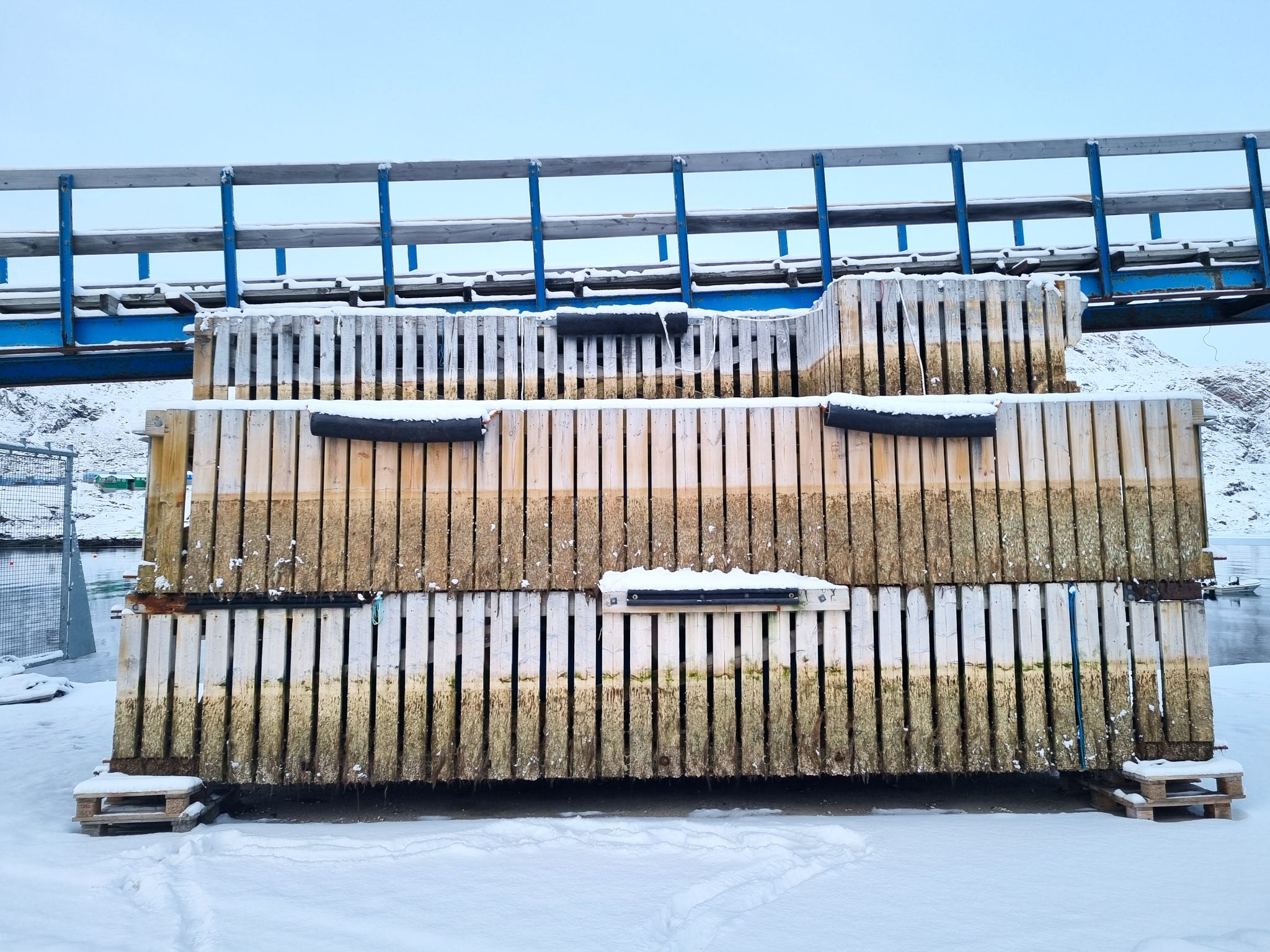
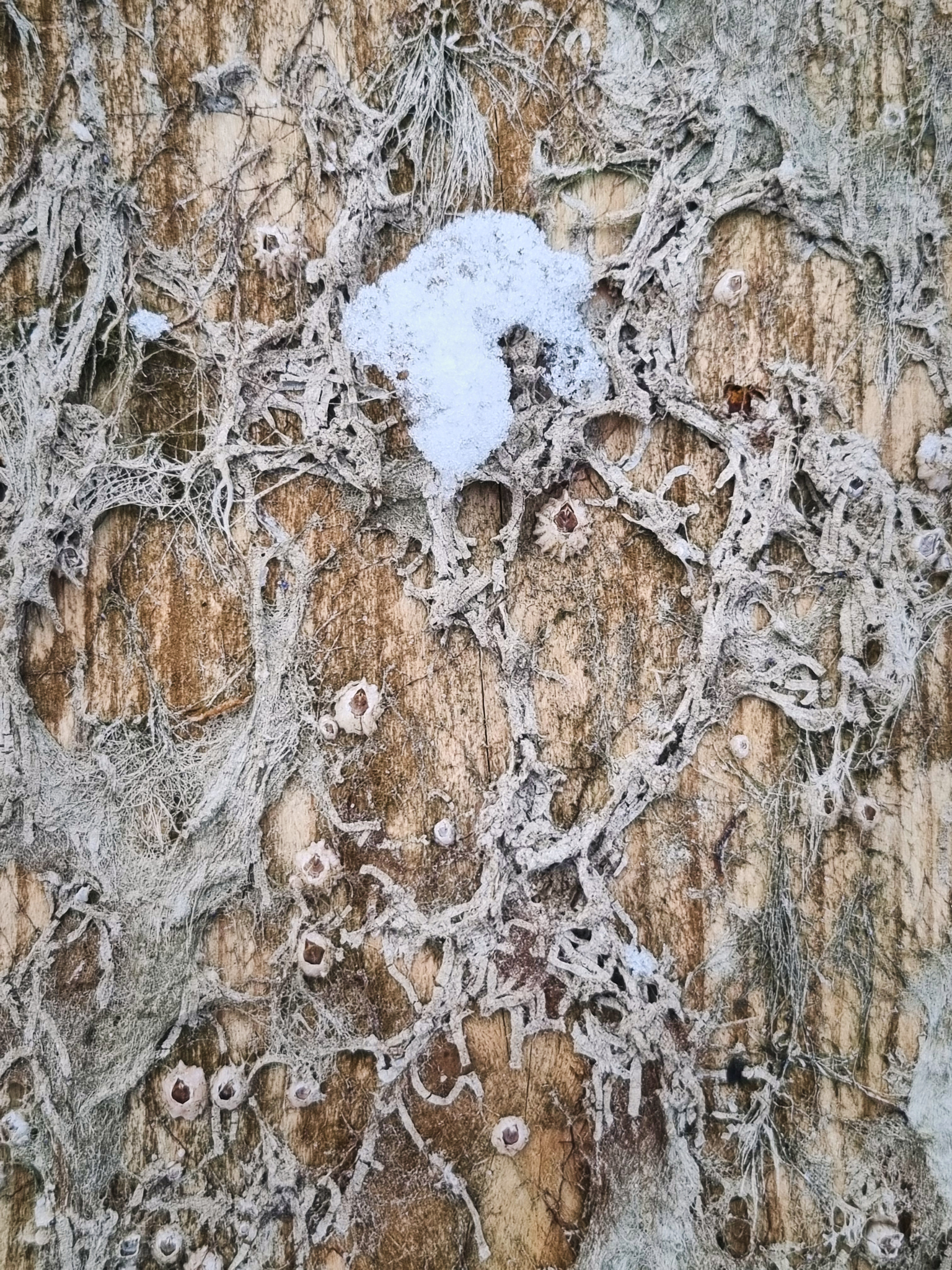
… and what caught my eye was the way the snow was clinging to the biofouling (new word!). So I went over for a closer look and when I zoomed in, I became fascinated by the structures of the “crud” (my technical term).
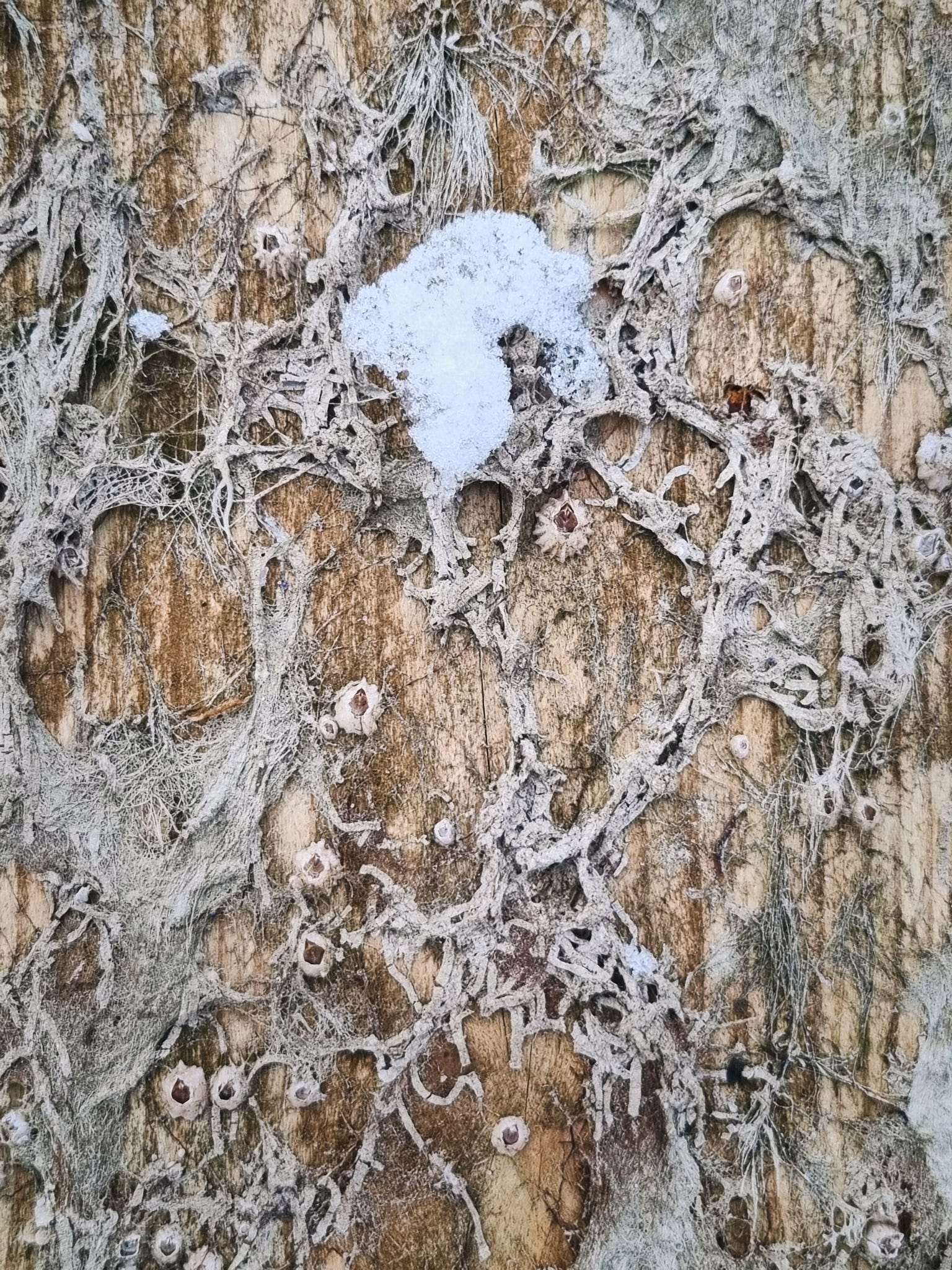
Cool! I thought. But what am I actually looking at? What is this stuff? What animals used to own the shells?
This is why I love awareness prompts like this! They get me to start asking questions I would never have thought of. And while I’m not going turn into a marine biologist because of it, I did give ChatGPT some context and asked it what it thought I was seeing. A summary of what it gave me:
This image shows marine biofouling on wooden boat pontoons in Sisimiut, Greenland, from the section normally submerged. The tangled grey, lace-like material is not vegetation, but the skeletal remains of bryozoan colonies, possibly mixed with hydroid residues. These are colonial animals common in cold Arctic waters that leave brittle, netted structures once the living tissue dies back.
The small circular white structures are mainly acorn barnacles, identifiable by their volcano-like shape and central opening. Some of the tiniest white rings may instead be spirorbid polychaete tube worms, which build tightly coiled calcareous tubes on hard surfaces. These organisms often coexist on pontoons, pilings, and hulls.
Love learning new things like this, even if this is as far as I’ll take it. And I would never have thought to ask the question without the prompt to notice something tiny and overlooked.
A Haiku Moment
alone on the ice
bent over something scavenged
a midnight raven
— Lisa Germany, Modern Haiku 55:3
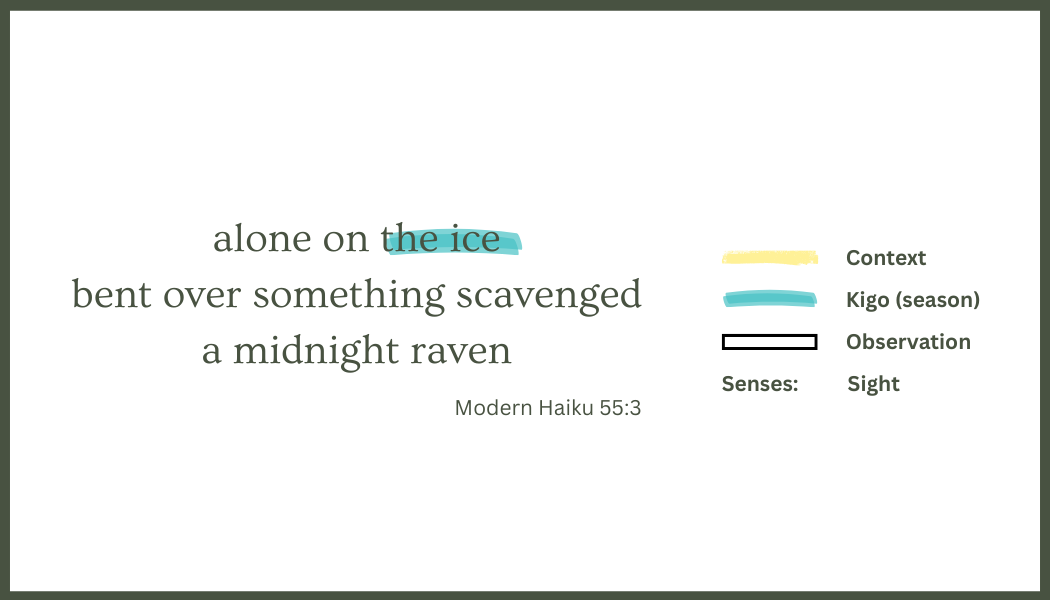
My haiku about the raven is not so easily divided into context and observation. Is it just the first line that’s context? Or the last line? Or the first two lines? Or the last two lines? I think I could make the argument for each of those options. And that’s why I haven’t included any punctuation to guide the reader to the “correct” choice. There is no correct choice.
It’s an example of why the artificial structure of “context” and “observation” or “fragment” and “phrase” is useful to keep in mind but not necessary when writing haiku.
One of the reasons this haiku works well is because each line is a mystery that you want the answer to.
“alone on the ice” → What is? Why’s it alone? Ice? Where are we?
“bent over something scavenged” → I still don’t know what we are talking about and now it’s bent over something else we don’t know about
“a midnight raven” → Ah some closure! I now have the answer to my first question at least (what was the subject of the haiku).
Just like with a great story, haiku work really well if each line makes the reader want to read the next.
If you’d like to get my 10-page quick-start guide to haiku, subscribe to my newsletter.
Attention Practices
Following on from last week’s spotlight on the Dérive app, if that felt like too much to get started with, here is an even simpler way of wandering and noticing, no phone app required.
RBNXPLRNG was born during the pandemic, as many good ideas were, as a way of combining the philosophy of purposeful wandering with photography, but with just enough structure to make it easy to begin.
Use the website to automatically generate your walking route before you set out, then follow the directions at each intersection as it guides you through the neighborhood. Between intersections, slow down and photograph whatever catches your eye. By the end of the short walk, you’ll have a five-image series shaped by chance and personal perspective, revealing familiar places in surprising ways.
Developer Marcel Borgstijn recently discussed with Juliette Mansour of The Additional F-Stop how the project changes the way people move, observe, and engage with their surroundings. How a simple set of instructions gives people permission to slow down, explore, and discover details they would usually overlook.
I love how Juliette puts it in her reflection on her experience:
That sense of being “gifted” by places you think you already know is such a good sign that you’re still listening
RBNXPLRNG isn’t about taking great photographs; it’s about stepping outside, rekindling curiosity in familiar places, and noticing the small rewards hidden in new awareness and unexpected moments.
I encourage you to give it a go when next you are out and about.
Bonus tip: bring a friend and discover how differently each of you notices and is drawn to the world around you.
Something to Try
I promise I’ll branch out here soon, but just wanted to let you know that Rob Walker from The Art of Noticing has opened up the latest “Savor of the Month” to everyone, not just his paid community.
This month’s topic is: Calm
Any and all interpretations and creative endeavours are welcome. You can read more about how it works in his post.
Thanks for reading and have a great week!
Best wishes – Lisa
lisagermany.art