THL #01 – Revisiting locations, haiku, the Art of Noticing, and an awareness prompt
The topsy-turvy weather continues here in Greenland. For the past 2 days, we’ve had positive temperatures when it should be consistently around -17C 🤯🤯🤯 !
Field Notes
I have to admit, I didn’t get outdoors much this week. It’s been overcast, windy (a foehn wind from the icecap), and therefore warm (by Greenlandic winter standards), which means a lot of melting snow and ice.
So when Facebook reminded me of one of my favourite photos from 2022, I decided to revisit the location and take a 2026 version. Can you spot the differences?
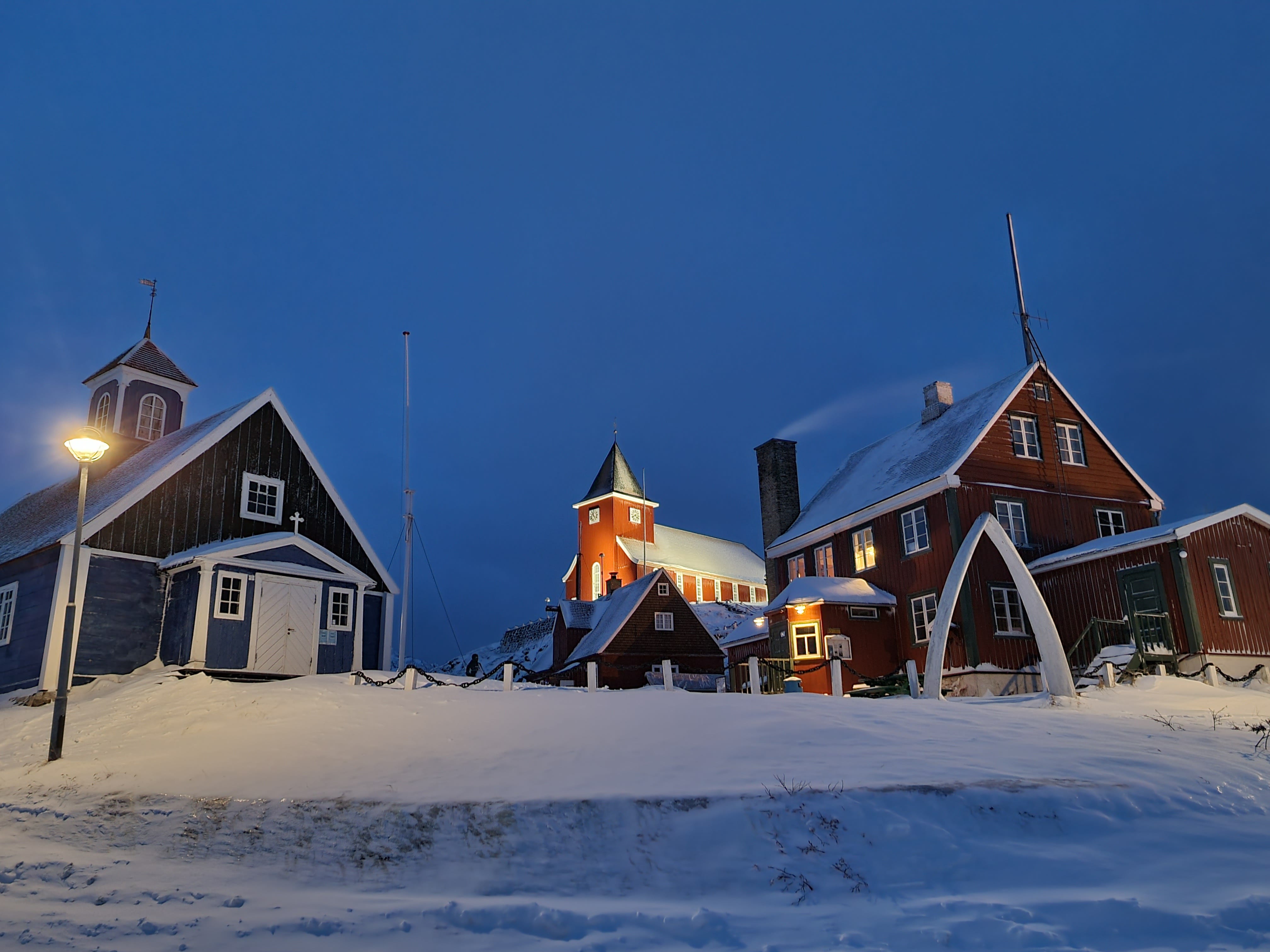
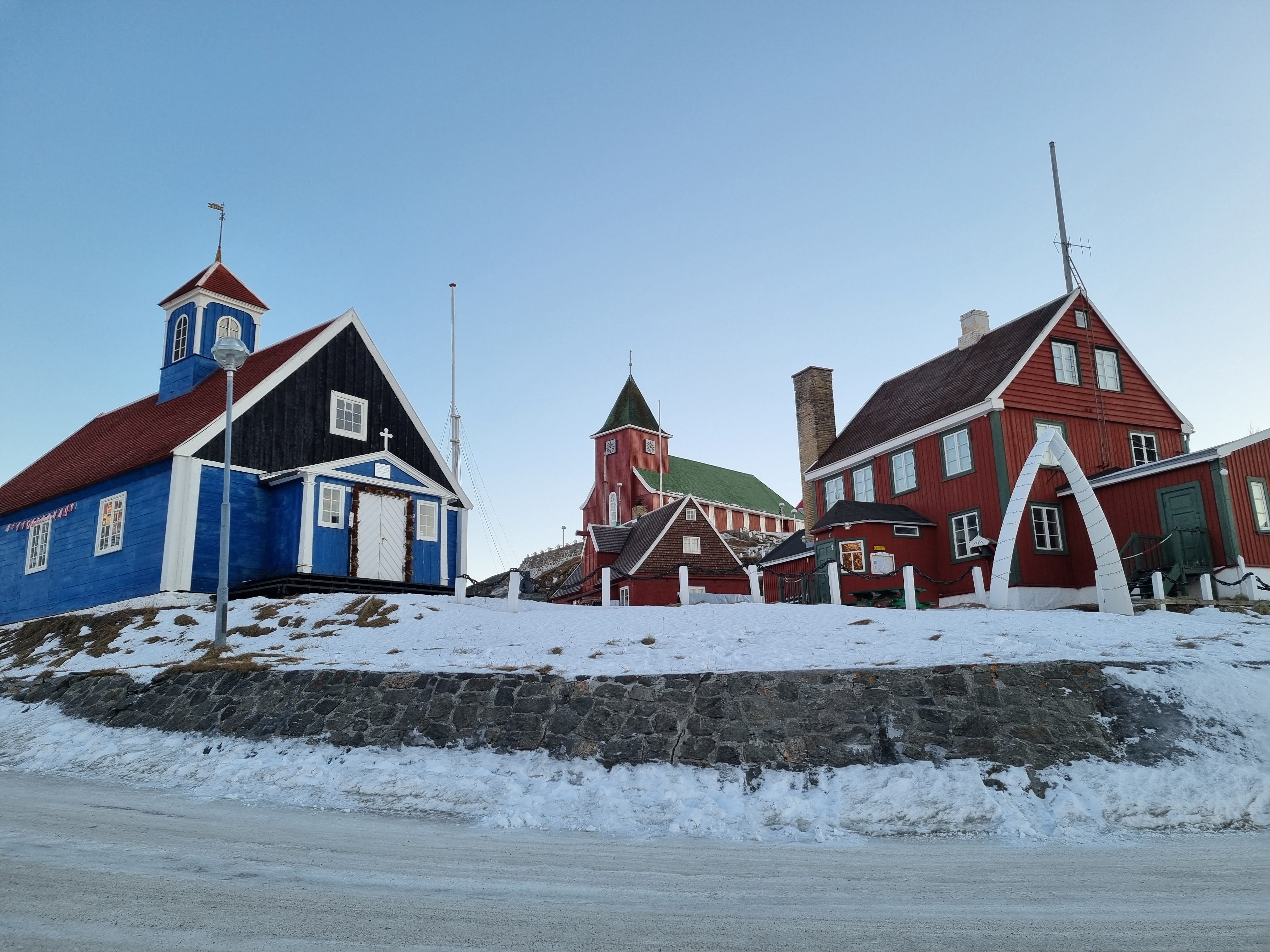
Revisiting a location and noticing how it changes over time is a simple but powerful way to attune yourself to weather patterns, seasonal shifts, and the subtle rhythms of a landscape.
One of my favourite photography projects that really runs with this idea is by Richard Misrach. Between 1997 and 2002, he took over 700 photos of the Golden Gate Bridge from a fixed position, capturing it at different times of day, across seasons, and in every imaginable weather condition. The result is a stunning study of how light, atmosphere, and weather transform the same iconic scene – even though the composition itself doesn’t change.
Revisiting a place or focusing on a single view is also a perfect way to explore how the kigo (season word) in a haiku can completely change the tone or emotion of a poem.
Consider how different feelings and emotions emerge from a single element, simply described in different ways:
- falling snow → winter or early spring — Soft, continuous, contemplative; evokes stillness, isolation, or meditation
- powdered snow → winter or early spring — Fresh and new, light and bright; evokes playfulness, quiet reflection, or innocence
- wet snow → early autumn or late spring — Melting, heavy, or disappearing; suggests transition, impermanence, gentle melancholy
- crusted snow → spring — Sun-hardened, aged; evokes endurance, traces of time, resilience, or stark beauty
You can probably think of other associations based on your lived experience.
One of the projects I worked on last year was a chapbook of haibun and haiku, all written while sitting at my favourite window in my living room in Greenland. Spanning the full year, it captures the transformations I observed as the seasons unfolded from that one specific viewpoint.
A Haiku Moment
after the foehn wind —
exposed beneath a snowy cloak
dark mountain ribs
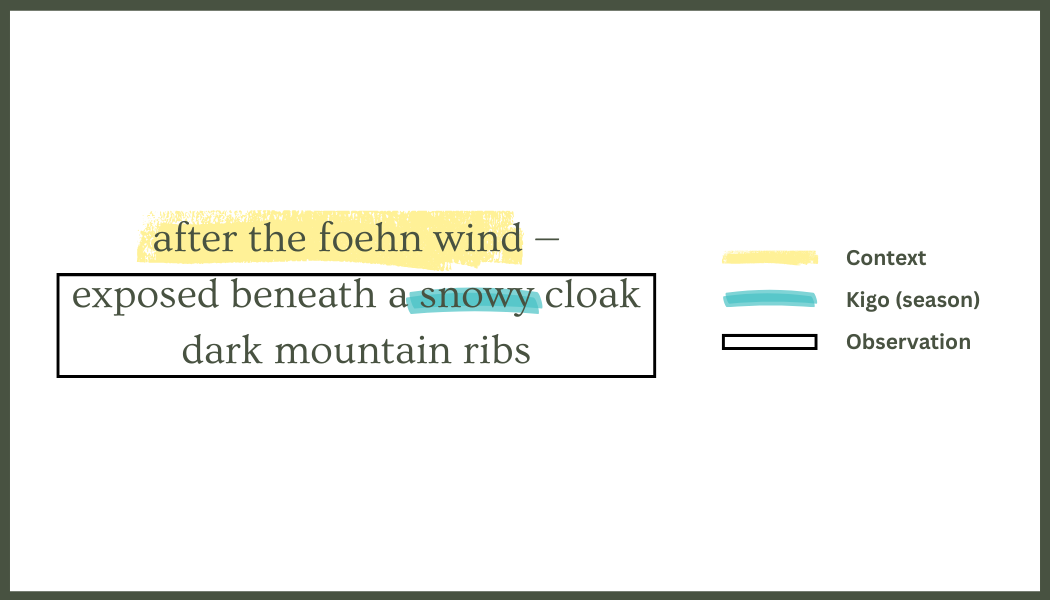
If you’d like to get started with haiku and learn more about the above breakdown, subscribe to my newsletter to download a 10-page quickstart guide.
Attention Practices – The Art of Noticing
Thought I’d start with a name that is almost synonymous with the word “noticing” – Rob Walker.
I first came across his work through The Art of Noticing, and then started following his newsletter (now here on Substack). What he does is simple but kind of magical: he shares little exercises and prompts that help you really pay attention to the world around you.
Some of these ideas might feel familiar – taking a colour walk (see below) or making a point of spotting something new on a route you walk every day. But his own wanderings show that what you notice is only limited by your imagination, your quirky interests, and your willingness to tune in.
Take, for example, his year‑end neighborhood calendar project. Each year he and his wife create a calendar using photos taken around their community, all organised around a single theme. The 2026 edition features dumpsters. Yes, dumpsters. It’s playful and a little absurd, but it turns something normally overlooked into a daily prompt for attention.
If you want to strengthen your noticing muscle, his work is a treasure trove. The exercises invite you to explore with intention – seeking, observing, pausing, and, if the mood strikes, capturing the details you encounter. These are the same habits that reveal haiku moments and inspire compelling photographs. Following his newsletter is a great way to keep your attention sharp and your curiosity alive.
Something to Try
One of the many prompts in Rob’s book and newsletter, and an easy place to start, is the Colour Walk.
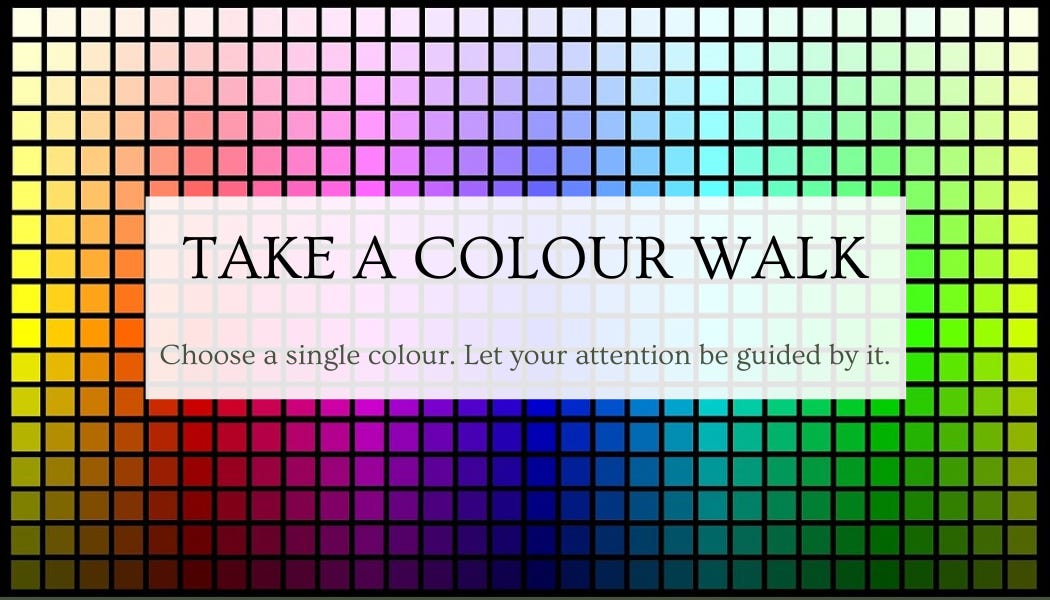
Before you head out, choose a single colour. Then, as you walk, let your attention be guided by it. Notice where that colour appears along your route: signs, flowers, painted doors, scraps of packaging on the pavement, the clothing of passersby. Pay attention to how it shows up, where it clusters, and where it disappears.
How you choose the colour doesn’t really matter:
- Pick a favourite.
- Use an online random colour picker.
- Grab a paint swatch from the hardware store and follow that.
The point isn’t the colour itself – it’s what happens when you give your attention a constraint and see what the walk reveals.
For bonus points – see if you can interpret the colour through all of your senses, not just sight.
That’s it for this week.
Thanks for reading and get out there exploring!
Best wishes – Lisa


ウグイス-768x512.jpg)